


Do You Need a Bread Oven to Make Great Sourdough? Experts Weigh In

Updated: Mar 27


If you’re passionate about sourdough and bake often, a bread oven can elevate your results and efficiency.
Bread ovens create superior loaves with consistent texture, steam retention, and heat dynamics, but they require space and investment.
For beginners or occasional bakers, a Dutch oven or standard oven is a more practical and versatile choice.
If you think bread ovens should be reserved for expert bakers, perhaps think again. “If you’re passionate about bread and want to dive deeper into sourdough, it’s a worthwhile investment if it fits your budget,” says Hannah Dela Cruz, the founder of the sourdough baking blog, Make It Dough. “I think a bread oven is a great piece of equipment for sourdough obsessives like me—who bake multiple times a week or even every weekend.”
For those considering a bread oven for their sourdough obsession, our experts detail the benefits, cost considerations, alternatives, and who might benefit most.
The Benefits of a Bread Oven
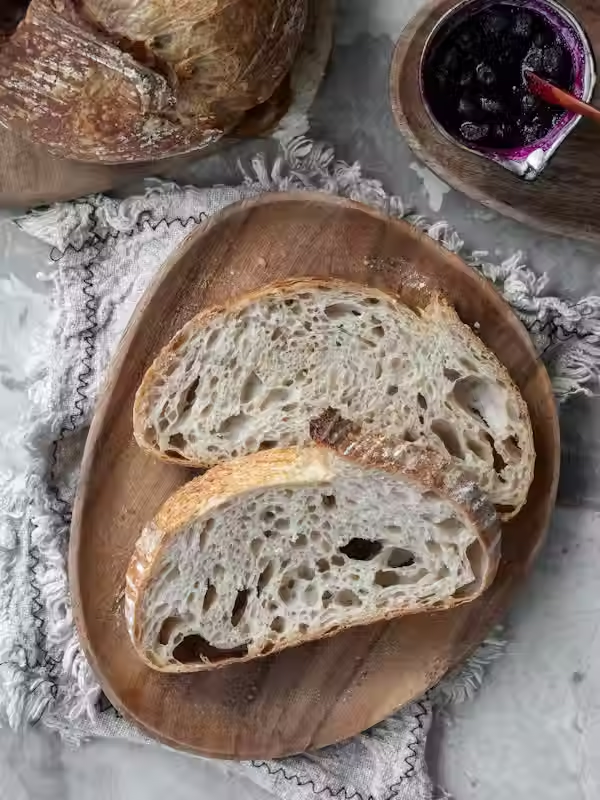
The top benefit of a dedicated bread oven is superior bread. “The crumb, the texture, the consistency—you are able to achieve better results, and they're extremely consistent, batch after batch,” says Melanie Underwood, founder and chef at Nourish & Gather.
Second, bread ovens offer more baking space. “You will quickly outgrow a home oven if you are scaling up production for cottage baking,” warns Erik Fabian, co-founder of Sourhouse. “Having more space allows for making larger breads and easier loading and unloading.”
Next, dedicated bread ovens are designed to retain steam. “Many commercial-style ovens offer ways to inject steam into the oven when needed,” Fabian says. “But even if you have to spray in water manually, it will not vent out as easily as a home oven.”
Bread ovens are also designed for the specific heat dynamics of baking bread. “Typically, a bake starts hot, and then the temperature drops throughout the bake,” Fabian explains. “Bread ovens also hold their temperature well after loading them with dough. That first contact with high temps in a moist baking environment delays crust formation. It helps create taller puffier loaves and crackly crusts.”
Cost and Size Considerations
“Countertop models start around $500,” Underwood says, “but quality bread ovens with integrated steam—which is really what you want if you are making this investment—range from $3,000 to more than $9,000.”
For comparison, a Dutch oven costs between $50 and $300.
Space is another major consideration. “These ovens are substantial,” Underwood says. “Think the size of a washing machine—sometimes taller. You need a dedicated space.”
The electrical requirements can also be a dealbreaker. “Most dedicated bread ovens require 240V power—the same as an electric range or dryer,” Underwood explains. “You usually need a licensed electrician to install a dedicated circuit. If you are in an older home, you may need to upgrade your electrical panel's amperage capacity entirely, which is a significant additional expense. In apartments or condos, this may not even be feasible.”
Is a Bread Oven Necessary?
Bread ovens are great if you have them on hand, but absolutely not necessary to make a beautiful loaf of bread, says Trina DeKett, a dedicated pastry chef and the creative and market expansion lead for baking brand BaKIT Box. “There are definitely pros to using a bread oven,” DeKett explains. “However, unless you are making a copious amount of bread and selling it to consumers, a standard oven is completely fine.”
Dela Cruz suggests that anyone who is just getting started with bread baking should at least hold off on investing in a bread oven. “I’ve met so many people who picked up bread baking during the pandemic and couldn’t keep up with the demands of a sourdough starter,” she warns. “Especially bakers who are short on kitchen storage space. For someone who is really excited about bread baking but hasn't developed a long-term habit, a Dutch oven may be a better option since they can use it in other ways down the line.”
When a Bread Oven Is Worth It—or Not
If you're baking for yourself, your family, or gifting to friends, Underwood says a Dutch oven or standard oven will serve you beautifully. “The question to ask is, ‘Can someone taste your loaf of bread and tell you used a bread oven versus a Dutch oven? Probably not,” she says. “And if you are eating it yourself or sharing it with loved ones, is it critical that it is perfect?”
If you are baking for the joy of it, for your family table, or for the meditative practice of working with dough—save the money. “Invest in good flour, a reliable Dutch oven, and the time to develop your practice,” Underwood says. “The bread will be just as delicious.”
If you are baking more than once a week and producing more than a few loaves each time, Fabian says that is when you might consider making an investment in a bread oven. “If you are a very experienced baker looking for a new challenge, then a bread oven may be a new challenge and inspiration for you,” he says.
Bread Oven Alternatives
If you're on the fence about a dedicated bread oven, DeKett suggests the following options:
Conventional oven: This is the run-of-the-mill oven you find in most households. The heat comes from both the top and the bottom, which helps bake multiple dishes at once.
Convection oven: An oven with dedicated fans that heat and bake your products more evenly. The heat comes from the top and bottom—but mainly from the bottom—and the circulated air is gentler, which helps avoid hotspots.
Dutch oven: A Dutch oven is actually a cooking and baking tool—not an actual oven. This typically looks like a large, sturdy pot that is made for versatility. The thick and high walls help for items like breads, but a dutch oven can also sear meat well because it retains heat.
What to Consider Before You Buy
Some specialty kitchen appliances get used a few times and then forgotten. “Before making a purchase this substantial, I would recommend having an established, dedicated sourdough practice," Underwood says. "Are you baking daily? Weekly? Monthly? I would not purchase a bread oven without already baking regularly and knowing your rhythm. If you are baking one or two loaves once a month, this is not for you.”
Beyond the physical footprint of the oven itself, do you have the electrical capacity? “Can your kitchen accommodate the installation requirements?” Underwood asks. “Do you live in a space where modifications are even permitted?”
When it comes down to it, skill level matters less than commitment level. “A bread oven won't make you a better baker,” Underwood says. “It will make a committed, practiced baker more efficient and consistent.”


Comments